Does sealing cracks stop radon?
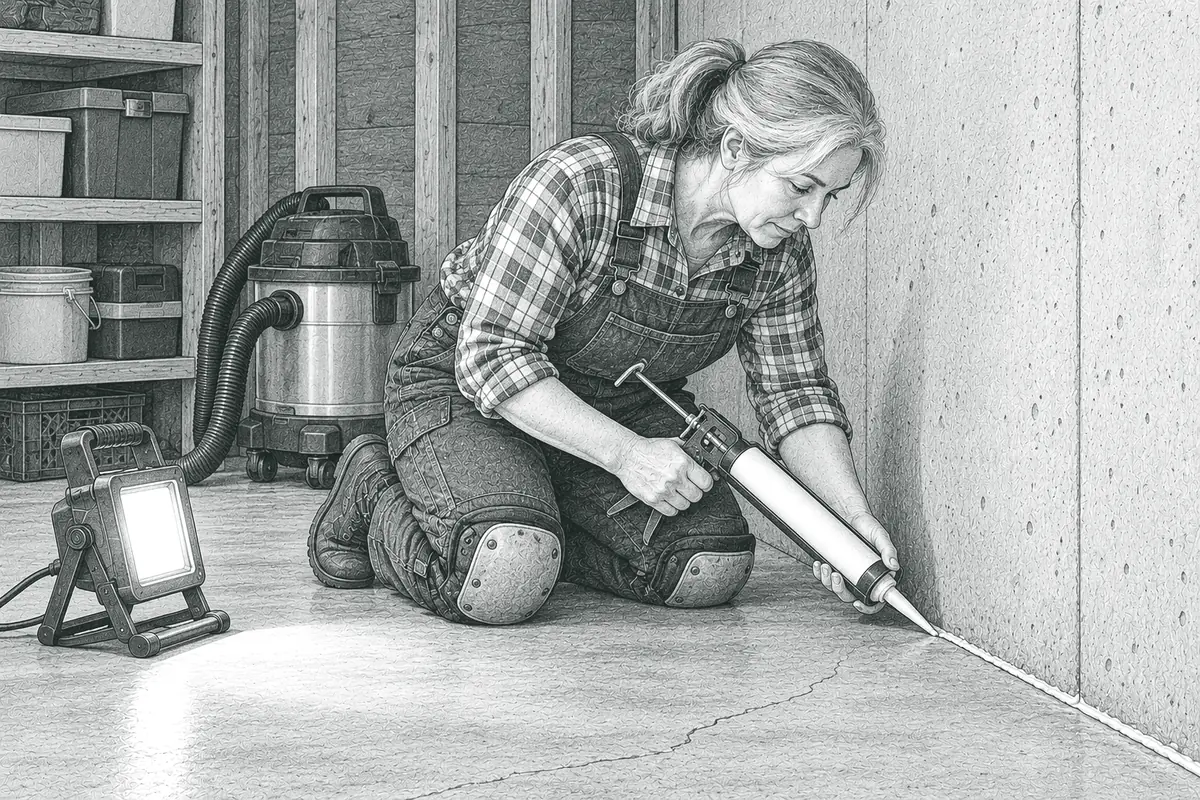
Sealing cracks on its own usually doesn't lower radon much. In a Health Canada (opens in a new tab) follow-up study, homes that only sealed openings cut their radon by about 13% on average.
Radon gets in through lots of openings, and through the foundation itself. The house keeps pulling it in. Sealing works best as one part of a radon mitigation system.
About 13%
Average radon cut from sealing openings alone
90% or more
Cut from a full radon mitigation system
At least 91 days
A long-term retest after sealing or damage
Through the foundation
Radon moves through the foundation itself, not just its openings
Why doesn't sealing cracks fix radon?
Radon comes in anywhere the house meets the ground: cracks, construction joints, gaps around pipes and posts, floor drains and sumps. Health Canada (opens in a new tab) says it also moves through the foundation itself. You can't caulk all of that.
Construction joints
Gaps around pipes and posts
Floor drains and sumps
The air in most houses is at lower pressure than the soil around them, so the house keeps pulling gas in through whatever's left open.
Health Canada (opens in a new tab) says sealing helps, but its effect "will be limited depending on how high the radon level is and the unique characteristics of each home."
Where does sealing help?
The spots worth sealing are the big, open ones: a sealed lid on the sump, floor drains, gaps around pipes, and construction joints.
The national standard (opens in a new tab) for radon systems treats sealing as a needed part of a system, not a fix on its own. Closing those openings helps the fan pull gas from under the floor instead of pulling air out of your basement.
- 1Crack in the floor
- 2Floor drain
- 3Sump
- 4Gap around a pipe
- 5Where the floor meets the wall
Should you seal cracks anyway?
Water or drafts
Go ahead if they let in water or drafts. Just don't count on it for radon.
If you seal, test again
If you seal and want to see what it did, test again with a long-term test. That's at least 91 days.
After new damage
Health Canada (opens in a new tab) also says to retest in the next heating season after any new damage you can see in a floor or wall that touches the ground.
What lowers radon reliably?
A radon mitigation system. It's a pipe and a fan that pull gas from under the floor and vent it outside. Health Canada (opens in a new tab) calls this method (active soil depressurization) "the most trusted and effective solution" and says it can cut radon by 90% or more. See how a radon system works and what it costs.
Got a high result? See what to do nextOur systems include sealing the openings named in the written quote, such as sump pits, backwater valves, floor drains and major cracks.
No result yet? Start with a radon test.
Book a test or ask for a quote
Send us your result, or ask about a test.
Book a test or ask for a quote
Or call 519-991-8180
Monday to Friday, 9am to 5pm. Saturday by appointment.