What is radon?
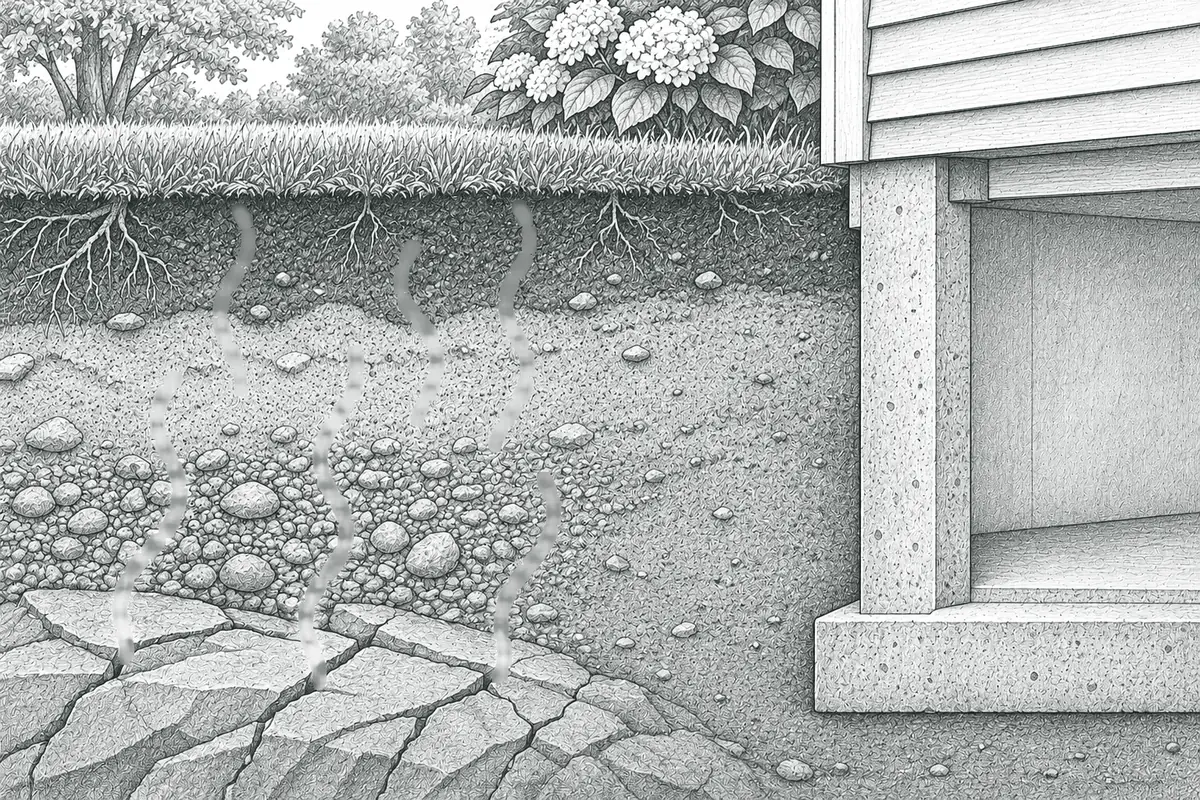
Radon is a radioactive gas that comes from uranium breaking down in soil and rock. You can't see it, smell it or taste it, and it can build up inside your home.
Health Canada (opens in a new tab) says it's the number one cause of lung cancer in people who don't smoke. The only way to know how much is in your home is to test.
Radioactive gas
From uranium breaking down in soil and rock
200 Bq/m³
Health Canada (opens in a new tab)'s guideline. Above it, fix it.
11%
Of Windsor-Essex homes tested were above 200 Bq/m³ (2015 to 2018)
At least 91 days
How long a test runs to count against the guideline
Where does radon come from?
Soil and rock contain uranium. As the uranium breaks down, it gives off radon gas. Outdoors, the gas thins out in the open air and isn't a concern. Indoors, it can build up.
How does radon get into your house?
It gets in wherever your house touches the ground: cracks in the floor and walls, gaps around pipes, floor drains and sumps.
Gaps around pipes
Floor drains
Sumps
- 1Crack in the floor
- 2Floor drain
- 3Sump
- 4Gap around a pipe
- 5Where the floor meets the wall
The air pressure inside your house is usually lower than in the soil around it, so the house pulls soil gas in. That pull is strongest in the heating season.
New homes and old homes can both have radon. The 2024 Cross-Canada Survey of Radon found a trend toward higher radon in newer homes.
Wondering if you can just seal the cracks? See Does sealing cracks stop radon? (source) (opens in a new tab)
Why does radon matter for your health?
Breathing in radon over many years raises your risk of lung cancer. The risk depends on how much radon there is and how long you're exposed to it. If you smoke too, the risk goes up a lot more.
It's a long-term risk, and it can be fixed. Health Canada (opens in a new tab)'s guideline for homes is 200 Bq/m³. What is a safe radon level? explains what your number means.
Is there radon in Windsor-Essex homes?
Yes. In the health unit's 2015 to 2018 study (opens in a new tab), 11% of Windsor-Essex homes tested were above 200 Bq/m³. That was 18% in Essex County and 6% in the City of Windsor.
Every home is different, though. Homes next door to each other can have very different levels, so a neighbour's result doesn't tell you yours.
More local numbers, with their sources, are on Radon in Windsor-Essex.
How do you find out your home's level?
Test it. A long-term test runs at least 91 days and gives the number you compare with Health Canada (opens in a new tab)'s guideline. There are three ways to start:
Check the library
Essex County Library (opens in a new tab) lends a digital radon monitor for up to 3 weeks, usually in the colder months. It's a short look, not a long-term test. We haven't confirmed whether City of Windsor residents can borrow one.
A long-term kit
Buy a long-term kit and do it yourself.
A certified professional
Have a certified professional test your home.
Short or long radon test explains the difference, and Where to get a radon test kit covers kits and the library (opens in a new tab) loan.
Can you lower radon in your home?
Yes. A radon mitigation system pulls the gas from under the floor and vents it outside. Health Canada (opens in a new tab) calls this method, active soil depressurization, "the most trusted and effective solution."
Radon mitigation shows how it works, and Prices shows what it costs.
Book a radon test
The only way to know your level is to test. Find out your home's level.